

How Building Automation Professionals Use Assemblico
Building automation requires system-level understanding across multiple installation domains. Assemblico helps automation specialists structure these complex decisions.
1.
Define the integration challenge:
“How should HVAC and lighting systems interact in this building?”
“Which communication protocol is best for this project?”
2.
Analyse system context. AdvisorAI evaluates:
• building energy systems
• HVAC infrastructure
• electrical networks
• control architecture
3.
Evaluate parameters:
Installers and engineers can analyse:
• control logic
• network architecture
• communication protocols
• system interoperability
4.
Compare technical options:Instead of focusing on individual components, professionals can evaluate how systems interact across the entire building.
5.
Make a confident system decision
AdvisorAI provides structured reasoning supporting integration design and automation architecture.
The reality of building automation
Building automation systems are designed to optimise building performance.
But success depends on system integration.
Automation professionals must consider:
• HVAC performance
• lighting control
• energy monitoring
• user comfort
• safety systems
A building automation system works only when these domains interact correctly.
Where problems usually start
Most building automation issues appear during system integration.
Common problems include:
• incompatible communication protocols
• incorrect system architecture
• poor integration with HVAC or electrical systems
• insufficient data visibility
• control logic conflicts
Many projects struggle not because the technology is wrong, but because system interaction was not fully understood.
What Assemblico actually changes
Assemblico introduces structured reasoning for building systems.
Instead of:
• analysing systems in isolation
• relying on vendor documentation
• manually verifying compatibility
Automation professionals can work with:
• integrated system analysis
• cross-domain compatibility evaluation
• structured decision logic
AdvisorAI supports building automation as the central intelligence layer of modern buildings.
Micro Case Study
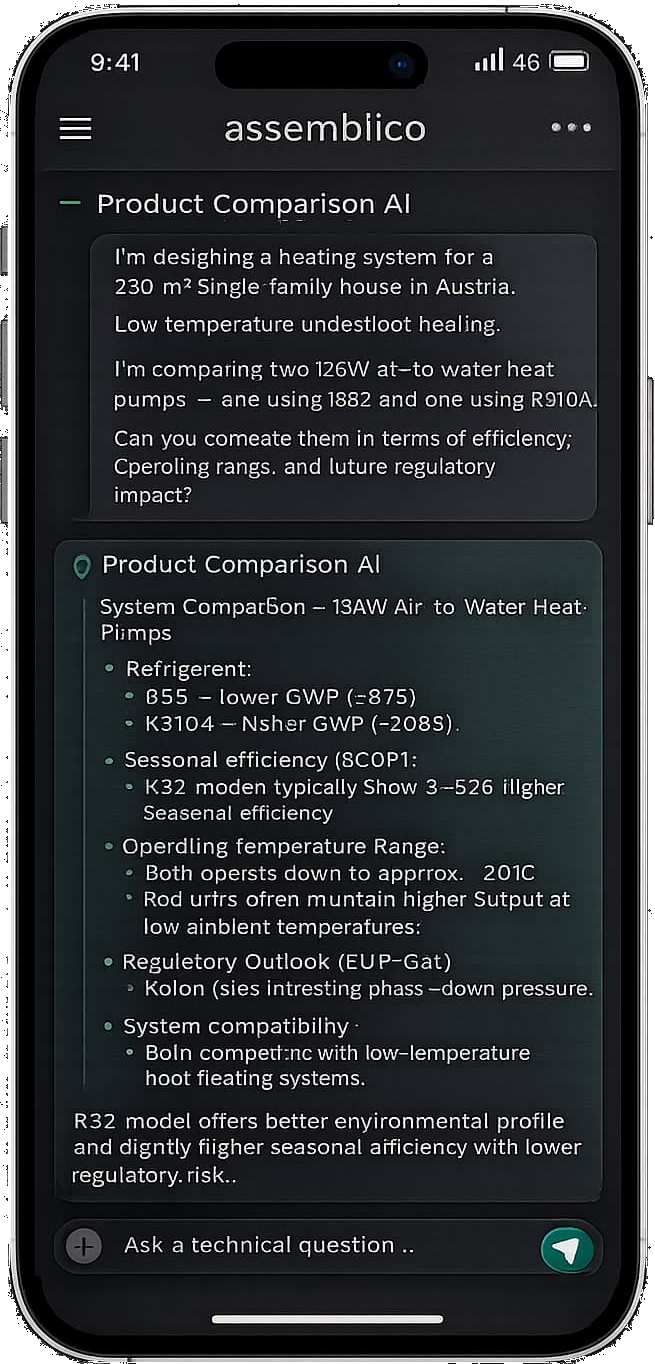
Product Comparison AI
Example use case:
Comparing two building automation platforms.
Parameters analysed:
• communication protocol support
• system scalability
• integration with HVAC systems
• energy monitoring capabilities
Result:
Automation specialists understand which platform fits the building architecture.
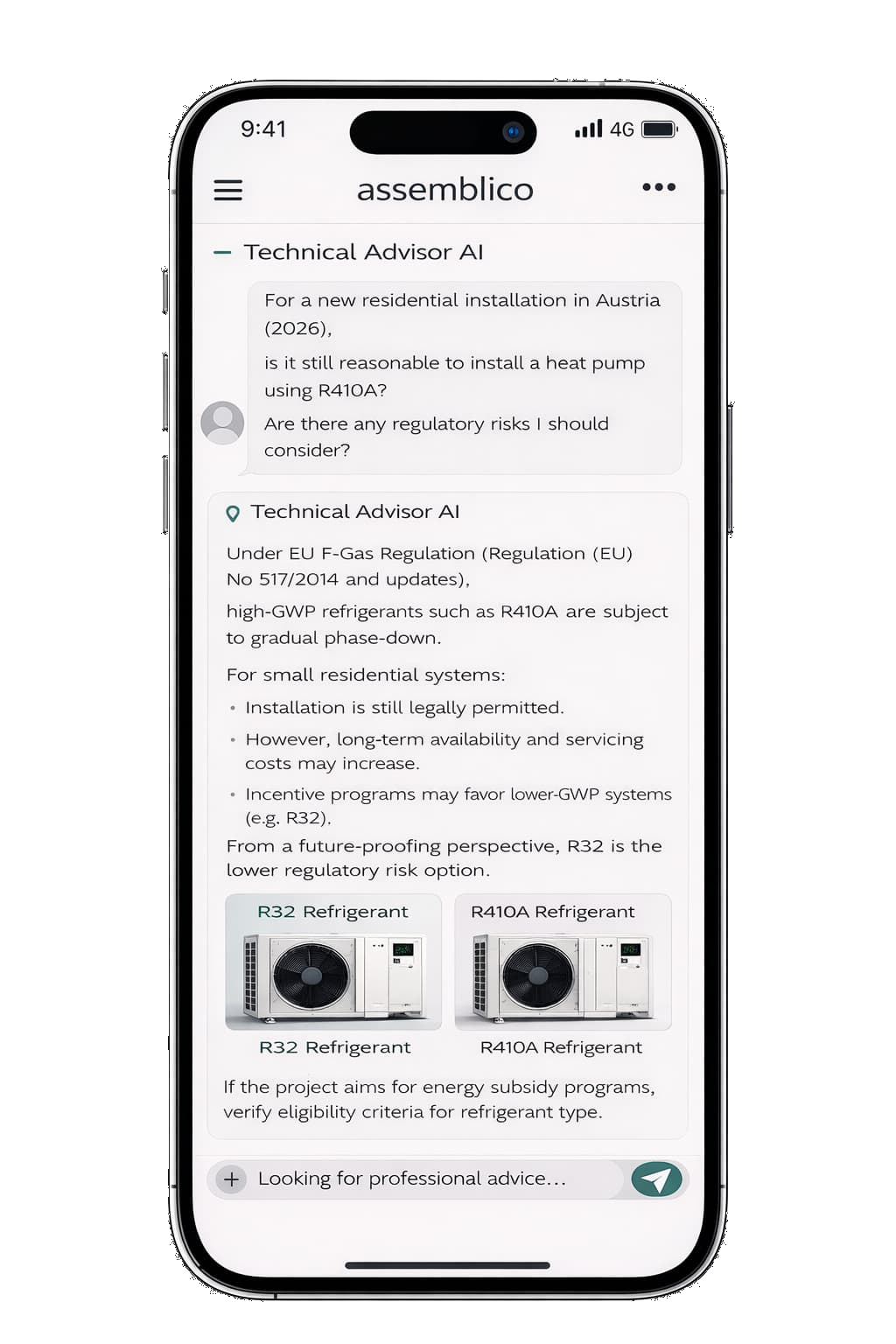
Technical Advisory AI
Example question:
“Should this building use BACnet or KNX for automation?”
AdvisorAI explains:
• protocol architecture
• system compatibility
• integration possibilities
AdvisorAI tools for building automation
Automation professionals can use several tools to support system integration decisions.
Question Engine
Ask technical questions related to building automation and receive structured explanations about system interaction and integration.
Product Match
Identify compatible automation components, controllers and sensors.
Technical Calculation
Evaluate system capacity, data flows and automation performance parameters.
ROI & Energy Savings
Estimate energy optimisation potential through automation strategies.
Investor Report
Generate professional documentation explaining building automation decisions and system benefits.
Building Automation does not work alone
Automation systems connect multiple building domains.
Your decisions affect:
• HVAC systems
• electrical infrastructure
• renewable energy installations
• safety systems
• data networks
Assemblico helps professionals understand these relationships without mixing responsibilities.
Why this matters for you
Working with building automation becomes easier when decisions are based on system-level reasoning.
Benefits include:
• clearer understanding of system interaction
• improved building energy performance
• structured automation architecture
• higher professional credibility
• fewer integration issues after installation
This is not a product catalogue.
It is a professional system integration decision tool.
Design smarter buildings with better decisions
Assemblico combines technical knowledge, product intelligence and engineering tools designed for building automation professionals. From integration questions to system architecture decisions, the platform helps professionals design more reliable building systems.

